
2026-08-18 · Mark Sullivan
How to Tell If Your Roof Leak Is Caused by an Ice Dam
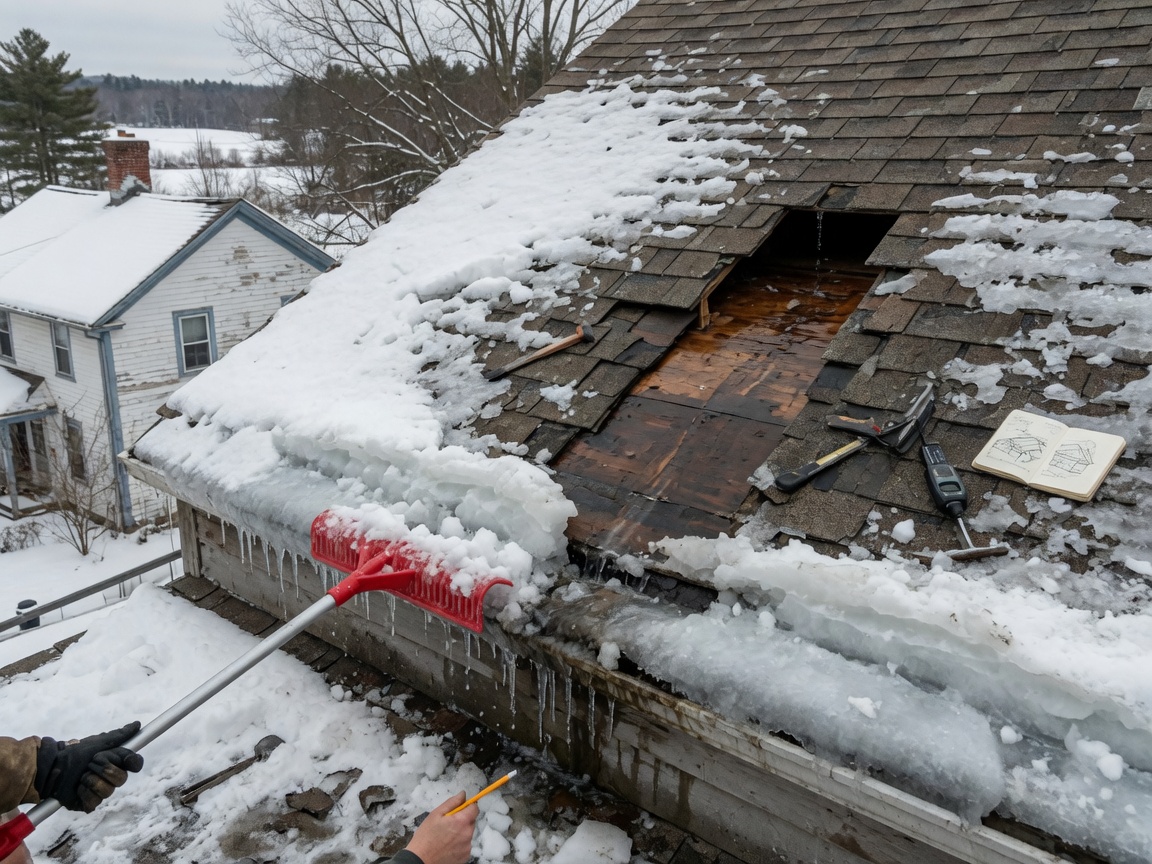
A roof leak traces to an ice dam when water appears along the eaves or in second-floor ceilings right after a thaw following several days of sub-freezing temperatures and heavy snow. In Boxborough homes built between the 1960s and 1990s, this pattern shows up most often because many attics lack continuous insulation at the eaves.
Common Visual Indicators on Boxborough Roofs
Ice dams leave distinct marks that differ from flashing or valley leaks. Look for a ridge of ice along the gutter line that persists after the rest of the roof has cleared. Inside, brown water stains often run parallel to the exterior wall on the second floor, usually within 2–4 feet of the eaves. On asphalt shingles common in Middlesex County, you may also notice lifted or curled tabs exactly where the ice sat. These signs appear most after January or February storms when daytime highs reach 35–40 °F and nights drop below 20 °F. Checking from the ground with binoculars after each thaw helps confirm the pattern before interior damage spreads.
Attic Inspection Steps That Confirm Ice Dam Activity
Start in the attic on a cold day when snow still covers the roof. Use a flashlight to scan the underside of the roof deck near the eaves for frost or dark moisture lines. Measure the insulation depth; anything less than 12 inches at the perimeter allows enough heat loss to melt snow. Feel the roof sheathing with your hand—if it feels warm while outdoor temperatures sit in the teens, heat is escaping and feeding the dam. Note any bathroom or kitchen exhaust vents that terminate in the attic rather than through the roof; these add extra moisture and warmth that accelerate melting. Document the locations with photos so you can match them to exterior ice ridges later.
How Local Climate and Housing Stock Influence Ice Dam Formation
Boxborough’s humid continental climate brings repeated freeze-thaw cycles that turn normal snow loads into ice dams faster than in coastal Massachusetts towns. Many single-story ranches and split-levels near Steele Farm and Flerra Meadows Conservation Area have shallow roof pitches and limited overhangs, so meltwater has nowhere to go except under the shingles. Older homes around Boxborough Town Hall often have knob-and-tube wiring and minimal ventilation, trapping heat in the attic. When snow sits for five or more days followed by a 10-degree daytime rise, the cycle repeats and leaks appear within 48 hours. These conditions differ from Acton or Littleton only in the density of 1970s construction that still dominates local neighborhoods.
Next Steps When Ice Dams Are Confirmed
Remove the dam safely with a roof rake from the ground rather than climbing onto ice-covered shingles. Once the immediate water source stops, schedule a professional inspection to check for damaged underlayment and sheathing. In many cases the repair involves lifting shingles, replacing the ice-and-water shield in the lower 6 feet of the roof plane, and adding ridge ventilation. Homeowners in surrounding towns such as Harvard and Littleton face the same seasonal pattern, so addressing insulation and ventilation now prevents repeat leaks next winter. Track the dates of each event so you can see whether the problem repeats after every major snowfall.
Related Resources for Ongoing Winter Roof Care
Review the full winter damage process in the article How Winter Weather Damages Asphalt Shingles to understand how repeated cycles affect shingle life. If the leak has already reached interior ceilings, compare options in Roof Repair vs. Replacement: How to Know Which You Need. For seasonal checks that reduce ice dam risk, follow the checklist in Roof Maintenance Checklist: What New England Homeowners Should Do Every Season. When active leaking occurs, request Storm & Winter Damage Roof Repair to stop water entry before it reaches the second floor.